
-


 Продавец:CASSARIOОбычная цена AED 119Цена со скидкой AED 119Цена за единицу за

-

 Продавец:CASSARIOОбычная цена AED 142Цена со скидкой AED 142Цена за единицу за
-

 Designer ChoiceПродавец:CASSARIOОбычная цена From AED 95 to AED 142Цена со скидкой From AED 95 to AED 142Цена за единицу за
-

 New ArrivalПродавец:CASSARIOОбычная цена From AED 100 to AED 130Цена со скидкой From AED 100 to AED 130Цена за единицу за
-
 Продавец:CASSARIOОбычная цена AED 47Цена со скидкой AED 47Цена за единицу за
-
 Продавец:CASSARIOОбычная цена AED 47Цена со скидкой AED 47Цена за единицу за
-
 Продавец:CASSARIOОбычная цена AED 142Цена со скидкой AED 142Цена за единицу за
-

 New ArrivalПродавец:CASSARIOОбычная цена AED 108Цена со скидкой AED 108Цена за единицу за
-
 Продавец:CASSARIOОбычная цена AED 142Цена со скидкой AED 142Цена за единицу за
-
 Top SellerПродавец:CASSARIOОбычная цена AED 119Цена со скидкой AED 119Цена за единицу за


Ever wondered why some doors simply feel better to open, close and lock than others?
A doorway marks a transition, but it is the lock and latch hidden within it that gives that transition a sense of purpose. One moment, a room is open and connected to everything around it; the next, it becomes private, quiet or secure. That change happens through a mechanism most people never see, yet use every day.
At Casa Milano, our collection of latches and locking mechanisms is selected to make that hidden part of the door work as thoughtfully as the visible one. From mortise dead locks and sash locks to magnetic options, each solution brings a different way of managing how a door closes, holds and secures itself, while keeping the mechanism discreetly integrated into the door.
About Casa Milano
Casa Milano brings together premium interior solutions across sanitaryware, ironmongery, kitchens, flooring and other elements that give a space its final character. Our collections bring together international design, considered materials and practical performance, allowing individual details to work as part of a larger interior rather than appearing as isolated choices.
With door hardware, the details are often hidden once installation is complete. That does not make them any less important. A lock needs to suit the construction of the door, the way the space is used and the type of closure required, while its surrounding hardware needs to work with it naturally. Our approach brings door latches and locks into that wider conversation, alongside handles, hinges and other ironmongery.
About Our Locks & Latches Collection
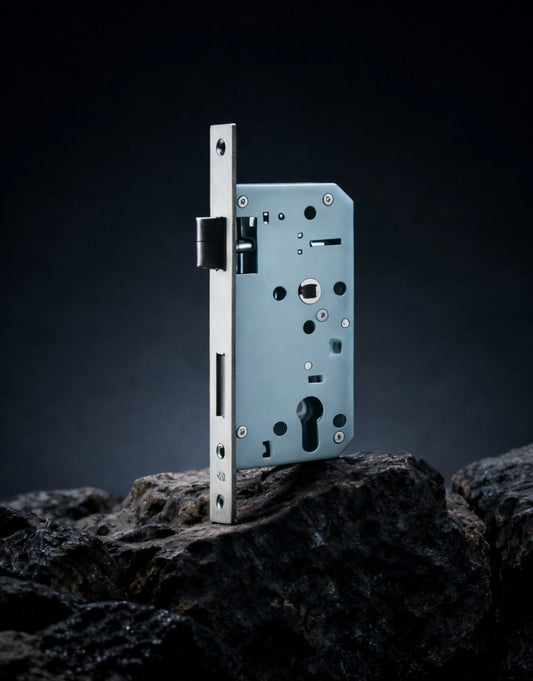
Mortice Dead Locks: Designed for doors where a dedicated locking mechanism is required, these solutions sit within the door edge to provide secure closure while keeping the working hardware largely concealed.
Mortice Sash Locks: Combining a latch and locking function within one mortice unit, sash locks offer a practical solution for doors that need both everyday closing and the option of secure locking.
Mortice Magnetic Locks: Magnetic mechanisms create a different kind of closing action, allowing the latch to engage as the door reaches the frame for a cleaner and more understated interaction.
Concealed Lockbody Installation: The lockbody is fitted into the edge of the door leaf while the strike plate sits within the frame, allowing the main mechanism to disappear into the architecture once the door is installed.
Italian-Made Hardware: The current collection is centred on Cassario products with Italy listed as their country of origin, bringing European hardware expertise into a considered door specification.
Why Choose Latches and Locks
Create Privacy: A latch or lock gives a door more control than simply keeping it shut, making it possible to separate bedrooms, bathrooms, offices and other spaces when privacy matters.
Choose the Right Type of Closure: Different doors call for different mechanisms. A dead lock, sash lock or magnetic lock can each serve a different functional requirement depending on how the doorway is intended to work.
Keep the Door Visually Clean: Since the primary mechanism is concealed within the door leaf, the finished surface can remain focused on its material, proportions and visible ironmongery rather than exposed mechanical components.
Support Everyday Use: A door can be opened and closed countless times over its lifetime. The mechanism needs to engage consistently and work naturally as part of that repeated daily movement.
Complete the Hardware System: A lock does not work in isolation. Its relationship with the handle, cylinder, hinges and strike plate determines how successfully the complete door assembly performs.
Why Choose Locks & Latches at Casa Milano?
There is something satisfying about hardware that works so naturally you barely notice it. Casa Milano selects door lock latches with that principle in mind, bringing together mechanisms that can disappear into the door while still giving the doorway the control it needs. Instead of treating a lock as an afterthought, we consider its role within the construction, use and overall specification of the door.
The same thinking extends across our wider ironmongery collection. A well-designed doorway is made up of many individual decisions, from the handle that you touch to the hinge that carries the door and the stopper that controls its final movement. By bringing these elements together, Casa Milano makes it easier to create a door that feels cohesive not only in appearance, but in the way it behaves every time it is used.
Conclusion
Some of the most important parts of a door are the ones you never see. A lock sits quietly inside the edge, waiting for the moment a room needs to become private, a doorway needs to stay secured or a door simply needs to settle firmly into place.
At Casa Milano, our collection of latch locks and mortice mechanisms brings that hidden functionality into a considered ironmongery specification. With different locking approaches, concealed installation and Italian-made options, these are details designed to make the everyday experience of a door feel natural, controlled and complete.
FAQs
1. How do I choose the right mortice lock for my door?
Consider the door type, thickness, lock function, backset and available space inside the door edge. The lock should also be compatible with the handles, cylinder and strike plate being used.
2. What is the difference between a mortice dead lock and a mortice sash lock?
A mortice dead lock is primarily designed around the locking bolt, while a mortice sash lock combines the latch and deadbolt functions in one lock body. The right option depends on how the door needs to operate and be secured.
3. Are magnetic mortice locks better for modern interior doors?
A magnetic lock can provide a cleaner appearance because the latch remains flush with the door edge when the door is open. It can be particularly useful where minimal, contemporary door hardware is part of the design. Casa Milano currently lists a CASSARIO mortice magnetic lock in this collection.
4. Can a mortice lock be installed in an existing door?
It may be possible, but the door needs enough material and internal space for the lock body and its required fittings. Existing cut-outs, door thickness and strike-plate position should be checked before selecting a replacement.
5. Can I use any lever handle with a mortice lock?
Not necessarily. The handle spindle, lock follower, fixing arrangement and lock dimensions need to be compatible. It is better to choose the handle and mortice lock as a coordinated hardware system rather than assuming every combination will work.
6. How long should a quality mortice lock last?
A well-made mortice lock can provide years of regular use when it is correctly installed and maintained. Longevity depends on the lock construction, frequency of use, door alignment and how much stress the mechanism experiences.
7. Why does a mortice lock become difficult to operate over time?
Misaligned doors, loose hinges, dirt inside the mechanism or changes in the door or frame can make a lock harder to operate. If the key or handle requires increasing force, the alignment should be checked rather than repeatedly forcing the mechanism.
8. Are concealed mortice locks suitable for commercial and hospitality projects?
They can be suitable when the lock function and construction are specified for the expected level of use. Concealed installation also keeps much of the hardware within the door, which can support a cleaner appearance in hotels, offices and other designed spaces.