



What Is Parquet Flooring And How Does It Work
Specify enough villas in Emirates Hills or towers along the Marina, and you start noticing a pattern: clients obsess over stone, lighting, and finishes, but the floor is what actually dictates how a space reads. Marble gives you polish. It rarely gives you rhythm. That's the gap parquet has always filled, not as a substitute for luxury, but as a different vocabulary for it, one built on grain direction, joinery, and the way light moves across a surface rather than simply reflecting off it.
This is not a new discovery. Italian ateliers were solving for exactly this centuries ago, laying small timber blocks never long planks precisely because angled grain resists warping and holds a pattern's integrity over decades of foot traffic and shifting humidity. Herringbone, chevron, basketweave: these are not decorative choices so much as structural logic dressed as design. Get the layout direction wrong relative to a room's sightlines, and even a flawless installation will feel off. Get it right, and the floor does something marble can't: it changes character through the day, and it ages instead of just wearing down.
At CasaMilano, we still think about parquet flooring the way those early craftsmen did: as a decision made before the furniture plan, not after it.
What Is Parquet Flooring?
At its simplest, parquet wood flooring is not one long plank but individual pieces of wood, cut to size and arranged into a pattern, herringbone, chevron, or basketweave, so the floor itself becomes a design rather than a backdrop. Each block is laid by hand, fitted like a puzzle, until the surface reads less like flooring and more like a mosaic in timber.
The technique dates back to 17th-century European palaces, where wood was chosen over cold stone marble to bring warmth into grand interiors without losing their sense of occasion. What began as a practical solution, since angled wood blocks resisted warping better than long planks, soon became a mark of craftsmanship. With the modern upliftments and advancements the interior designing scenarios are changing but parquet flooring is still the same: an inheritance, not commodity.
Where Parquet Flooring Comes From?
While wooden flooring has been part of architectural design for centuries, parquet first emerged in 17th-century Europe, where master craftsmen transformed timber into intricate geometric compositions that elevated flooring into an art form. Signature layouts such as herringbone quickly became synonymous with refined interiors, showcasing the precision and artistry that continue to define parquet today.
Today, we see herringbone parquet flooring celebrated not simply for its heritage, but for its remarkable versatility in contemporary design. From elegant residences to luxury hospitality spaces across the UAE and the wider GCC, designers continue to specify parquet for its ability to introduce warmth, visual rhythm, and a timeless sense of sophistication that transcends changing trends.
How Parquet Flooring Is Made?
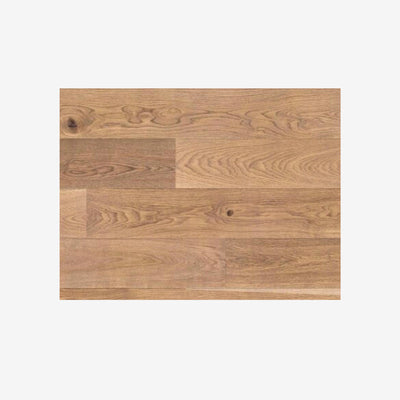
Every parquet floor begins as raw timber, oak, walnut, or teak, cut into small blocks rather than long boards. Each piece is kiln-dried to remove moisture, then precision-milled so it locks into its neighbors without gaps. What separates true craftsmanship from mass production is what happens next: the blocks are arranged, tested, and adjusted by hand long before adhesive ever meets the subfloor. At CasaMilano, this patience is what turns raw wood into engineered parquet flooring built to outlast trends.
-
Step 1: Selecting the Timber – Craftsmen choose wood species based on grain, hardness, and tone, oak for warmth, walnut for depth. Only timber free of weak knots or inconsistent grain moves forward, since the pattern's precision depends entirely on uniform material.
-
Step 2: Kiln-Drying the Wood – Freshly cut timber holds moisture that would warp over time. Kiln-drying reduces this moisture to a stable level, so each block resists shifting once installed, whatever the season or climate.
-
Step 3: Milling Into Blocks – The dried timber is milled into small, uniform blocks or strips, cut precisely enough that each piece interlocks with the next. This precision is what later allows patterns like herringbone parquet flooring to align seamlessly.
-
Step 4: Arranging the Pattern – Before any adhesive is applied, craftsmen lay the blocks out dry, testing herringbone, chevron, or basketweave arrangements to confirm the grain and tone flow correctly across the intended space.
-
Step 5: Bonding and Layering – Engineered constructions bond a hardwood top layer to stable plywood beneath, giving the floor strength without sacrificing the beauty of solid timber above.
-
Step 6: Finishing and Sealing – A final sanding and sealing protects the surface from wear while enhancing the wood's natural depth, completing a floor built to age gracefully rather than simply endure.
How Parquet Flooring Is Installed And Structured
Parquet flooring installation is less about laying a surface and more about building one, layer by layer, with precision at every stage. From subfloor preparation to the final pattern alignment, each step determines whether the finished floor holds its geometry for decades or shifts within a single season.
-
Subfloor Preparation: The existing floor is leveled and cleaned thoroughly, since even minor irregularities beneath the surface can distort the pattern above. A stable, dry base is non-negotiable before any timber touches the ground.
-
Moisture Barrier Installation: A protective membrane is laid across the subfloor to shield the timber from rising dampness, particularly important in warmer climates where humidity can otherwise compromise the wood's structure over time.
-
Dry Layout and Pattern Testing: Before adhesive is applied, craftsmen arrange the blocks dry to confirm the parquet flooring pattern aligns correctly with the room's dimensions, adjusting grain direction and symmetry as needed.
-
Adhesive Bonding: Each block is set into a specialized adhesive designed to accommodate natural wood movement, ensuring the floor remains stable through seasonal shifts in temperature and humidity.
-
Pattern Alignment and Pressing: Blocks are pressed firmly into place, one row at a time, maintaining consistent spacing so the herringbone or chevron design reads as a single, uninterrupted surface.
-
Sanding and Sealing: Once set, the entire floor is sanded smooth and sealed, protecting it from wear while allowing the timber's natural grain and depth to remain visible.
Types And Patterns Of Parquet Flooring
Parquet flooring comes down to two core decisions: the construction type you choose and the pattern you lay it in. The table below breaks down both, from solid versus engineered construction to the most popular pattern styles and their visual character.
|
Category |
Type |
Key Features |
Best Suited For |
|
Construction |
Solid Parquet |
Single, uniform piece of hardwood; can be sanded and refinished multiple times; typically glued or nailed |
Stable indoor climates, long-term flooring |
|
Construction |
Engineered Parquet |
Hardwood veneer bonded to plywood or HDF core; more dimensionally stable; often click-fit or glued |
Homes with humidity or temperature fluctuations |
|
Pattern |
Herringbone |
Classic zigzag with pieces set at right angles |
Traditional and transitional interiors |
|
Pattern |
Chevron |
Angled cuts meeting in a continuous V shape |
Modern, sleek, symmetrical spaces |
|
Pattern |
Basket Weave |
Alternating pairs of pieces forming an interlocking square |
Spacious rooms, adds depth and texture |
Conclusion
At CasaMilano, we believe the right flooring does more than complete a room, it defines how the space feels and functions for years to come. From timeless craftsmanship to contemporary layouts, modern parquet flooring continues to be a favourite among designers for its ability to add warmth, texture, and lasting character to every interior.
Whether you're designing a new home, renovating an existing space, or exploring flooring options for a luxury project, we're here to help you find a solution that reflects your vision. Our carefully curated collection of parquet flooring combines exceptional quality with refined design, helping you create interiors that are as enduring as they are beautiful.
Frequently Asked Questions
1. Is parquet flooring expensive?
Parquet flooring generally costs more than standard plank flooring due to the material and labor-intensive installation involved in creating its geometric patterns. Solid parquet tends to sit at the higher end, while engineered parquet offers a more budget-friendly alternative without sacrificing much on appearance.
2. Does parquet flooring last long?
Yes, parquet flooring is known for its longevity, especially solid parquet, which can last for decades and be sanded and refinished multiple times. Engineered parquet also offers a long lifespan, though its refinishing options are more limited.
3. Can parquet flooring be installed over existing floors?
In many cases, yes, particularly with engineered parquet, which can often be installed over existing flat, stable surfaces using a floating or click-fit method. Solid parquet typically requires a properly prepared subfloor for direct gluing or nailing.
4. Is parquet flooring suitable for humid climates?
Engineered parquet is generally better suited for humid climates due to its layered construction, which offers greater resistance to moisture and temperature fluctuations. Solid parquet can be more prone to expansion and contraction in such conditions if not properly acclimatized and maintained.
5. How do you clean and maintain parquet flooring?
Regular maintenance involves sweeping or vacuuming to remove dust and debris, along with occasional damp mopping using a wood-safe cleaner. It's important to avoid excess water and to promptly wipe up spills to protect the wood's finish and prevent warping.
6. What is the difference between parquet and laminate flooring?
Parquet flooring is made from real wood arranged in geometric patterns, offering a natural grain and the ability to be refinished over time. Laminate flooring, on the other hand, is a synthetic product with a printed wood-effect layer, making it more affordable but unable to be sanded or refinished like genuine parquet.
7. Where can I buy quality parquet flooring in Dubai or the UAE?
CasaMilano offers a curated selection of premium parquet flooring, including engineered hardwood from brands like ter Hürne, known for their sustainable sourcing and Blue Angel eco-certification. Homeowners and designers can explore available patterns and finishes through CasaMilano's showrooms or request a personalized quote directly through their website.